



The Federal Government has approved the recruitment of more than 94,000 new personnel across Nigeria’s security agencies as part of a renewed push to address the escalating insecurity in the country.
Under this directive, the Police Service Commission and the Nigeria Police Force will jointly enlist 50,000 new police constables. According to the PSC, the online recruitment portal will be open to qualified applicants from December 15, 2025, to January 25, 2026.
Applicants for general duty positions must possess a minimum of five credits in O’Level examinations, including English and Mathematics, obtained in no more than two sittings. Those applying for specialist roles are required to have at least four credits, including English and Mathematics, along with relevant trade certifications and no less than three years of experience. All applicants must also be Nigerian citizens by birth.
A senior Army official revealed that the Nigerian Army may enlist about 14,000 new soldiers in response to the President’s directive, noting that the number is still subject to final approval. Although the Navy and Air Force have not released exact recruitment figures, sources confirmed that both services intend to admit more personnel.
Earlier in June, the Ministry of Interior began processes to recruit 30,000 officers into the paramilitary services. Officials disclosed that the ministry is expediting the process to ensure rapid deployment of the recruits.
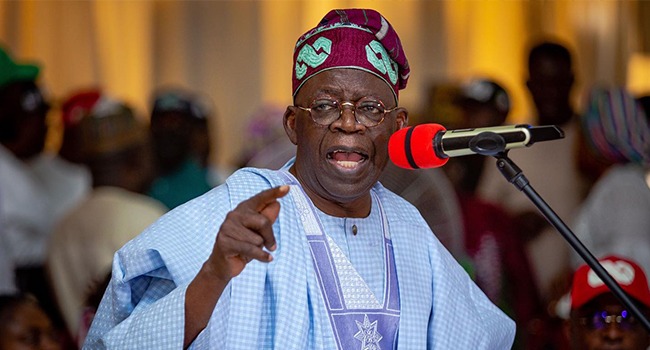
President Bola Tinubu had on November 26, 2025, declared a nationwide security emergency and ordered a significant manpower expansion across the police and armed forces.
The mass recruitment initiative is being implemented amid increased violence nationwide. The government hopes that boosting manpower will strengthen security operations.
Plateau State Governor, Caleb Mutfwang, commended the Federal Government’s decision, describing it as timely and essential given the growing insecurity across many states. During a visit to the Minister of Defence, he expressed confidence that the move would provide relief to overstrained security personnel. He also reiterated his long-standing support for state police, noting that Nigeria requires enough personnel to meet global policing standards and ensure adequate coverage in rural communities.
Security experts have offered mixed but largely positive reactions.
Retired Brigadier General Peter Aro described the plan as a necessary acknowledgment of the scale of Nigeria’s security crisis but warned that merely increasing numbers is not enough. He stressed the need for strict vetting, modern training, effective deployment doctrine, and expanded Army recruitment to match Nigeria’s population and security demands.
Retired Brigadier General Bashir Adewinbi supported the initiative but emphasized that only dedicated and qualified individuals should be recruited. He cautioned against political interference, stating that thorough screening is essential to avoid admitting unfit personnel.
Legal practitioners also highlighted the need for a merit-based, transparent recruitment process. The Chairman of the Committee of Chairmen of the Nigerian Bar Association (Benin Zone), Adebanjo Ebhoade, insisted that political influence must not be allowed to shape the process.
Similarly, a member of the Oyo State Community Policing Advisory Committee, Segun Ebenezer, welcomed the plan but warned that massive recruitment often attracts nepotism. He urged the government to enforce strict merit-based selection and ensure comprehensive training after recruitment.
The Attorney-General of Ondo State, Kayode Ajulo, argued that Nigeria now urgently needs state police. He maintained that the country’s diverse security challenges cannot be effectively managed through a centralised policing structure and called for a constitutional framework that would allow states to run their own police systems.
Edo State Governor, Monday Okpebholo, also urged the military to intensify efforts to secure the state. Receiving the new Commander of the 4 Brigade, he reaffirmed his administration’s commitment to supporting the Army with necessary logistics, including advanced drones. He encouraged the commander to inform the government of any operational challenges requiring state intervention.
In Oyo State, the chairman of the Nigerian Bar Association’s Ibadan Branch, Ibrahim Lawal, called on the state government and security agencies to urgently strengthen the state’s security architecture. He noted the recent rise in criminal activities, including kidnappings, and urged the authorities to restore the previously robust security system the state was known for.

