



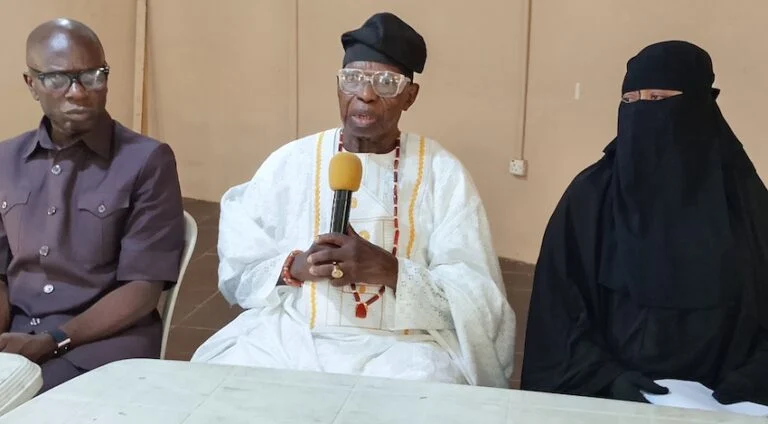
Veteran Nollywood actor and filmmaker, Lere Paimo, popularly known as Eda Onile Ola, has appealed to Oyo State Governor Seyi Makinde, the General Overseer of the Redeemed Christian Church of God, Pastor Enoch Adeboye, and other prominent Nigerians to intervene in what he described as an attempt to deprive him of the rights to his classic film, Ogbori Elemosho.
Paimo made the appeal on Wednesday during a press briefing in Ibadan, where he expressed concern over an alleged plan to remake the iconic Yoruba epic without his consent. Ogbori Elemosho, a landmark production released decades ago, is widely regarded as one of the works that helped shape the historical drama genre in Nollywood and cemented his reputation in the industry.
The filmmaker maintained that he was the original producer of the movie and said it played a major role in his career achievements, including earning him national recognition and contributing to the chieftaincy title he later received in Ogbomoso.
According to him, discussions about a possible remake began when the Soun of Ogbomoso approached him to inquire about the cost of reproducing the film. Paimo said a budget of about N100 million was mentioned at the time, along with suggestions for changes to the script, with assurances that further feedback would follow.
However, he alleged that in October 2025, a group of individuals visited his home claiming they had approval to remake the film and no longer required his permission. He said they described the payment to him as a “gift” rather than compensation for intellectual property rights.
Paimo further alleged that N7.5 million was later paid into his account, a move his children reportedly described as an attempt to manipulate him. He said he immediately refunded the money on their advice and instructed his lawyer to issue a cease-and-desist letter warning against proceeding with the remake without his approval.
Despite this, the veteran actor claimed the parties involved insisted they had royal backing and suggested that legal action would not favour him. He described the situation as a deliberate attempt to erase his legacy, recalling that producing the original film came at great personal sacrifice, including heavy debts and the loss of personal property at the time.
Calling for intervention, Paimo appealed to Governor Makinde, Pastor Adeboye, security authorities, and indigenes of Ogbomoso at home and abroad to help protect him from what he described as injustice in his old age. He also linked the dispute to recent rumours of his death circulating on social media, suggesting they may be connected.
Reacting to the controversy, the Public Relations Officer to the Soun of Ogbomoso, Peter Olaleye, described the matter as an internal issue. He stated that Paimo had been contacted and officially informed about the project, adding that the new production was a different story altogether and not a remake of the original work.
He maintained that the narrative belongs to Ogbomoso as a whole and that the disagreement should be resolved internally.
The dispute has continued to generate public interest, raising broader questions about intellectual property rights and legacy protection within Nigeria’s film industry.

