




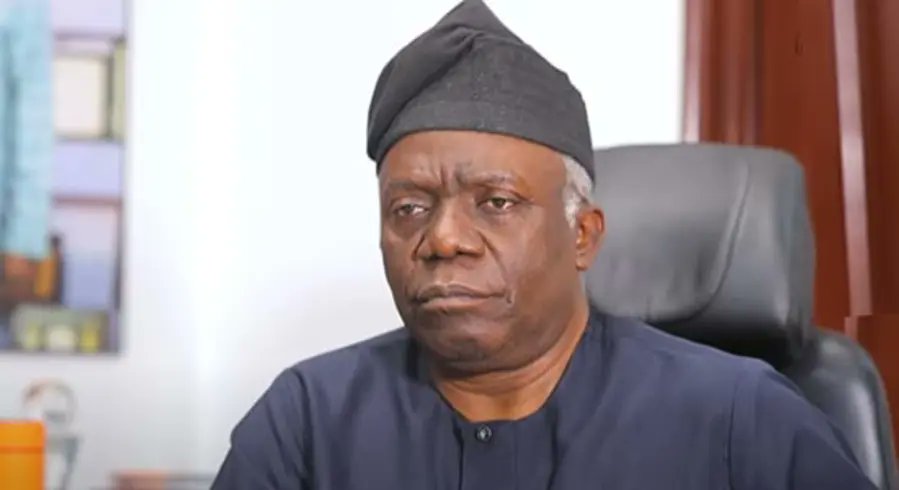
Senior Advocate of Nigeria and prominent human rights lawyer, Femi Falana, has argued that soldiers accused of plotting a coup against President Bola Ahmed Tinubu’s administration cannot be tried by a court-martial under Nigeria’s democratic system.
Falana said such allegations must be handled by regular civilian courts, in accordance with the provisions of the Nigerian Constitution. He made the clarification during a televised interview while responding to public debates on how alleged coup plots should be prosecuted in a democracy.
According to him, Nigeria’s return to civilian rule means that crimes directed at an elected government fall outside the scope of military tribunals. He stressed that court-martial proceedings are meant for breaches of military discipline, not for offenses that threaten the constitutional order.
“We are operating under a democratic system,” Falana explained. “The constitution is clear that cases of this nature must be taken before a high court. These soldiers are not attempting to overthrow a military regime, but an elected and constitutional government.”
He added that when an alleged offense involves treason or an attempt to subvert a democratically elected government, it ceases to be an internal military matter and becomes a crime against the state.
Falana warned that subjecting such cases to military tribunals would contradict democratic principles and weaken the authority of the constitution. He emphasized that offenses such as treason and treasonable felony are clearly defined under Nigerian law and fall strictly within the jurisdiction of civilian courts.
In his view, adherence to constitutional processes is essential to safeguarding democracy and ensuring that justice is not compromised in politically sensitive cases.

