




The 2026 Grammy Awards delivered a night of major musical milestones alongside strong political statements, as leading artists used the global stage to criticize US immigration policies and the actions of Immigration and Customs Enforcement (ICE).
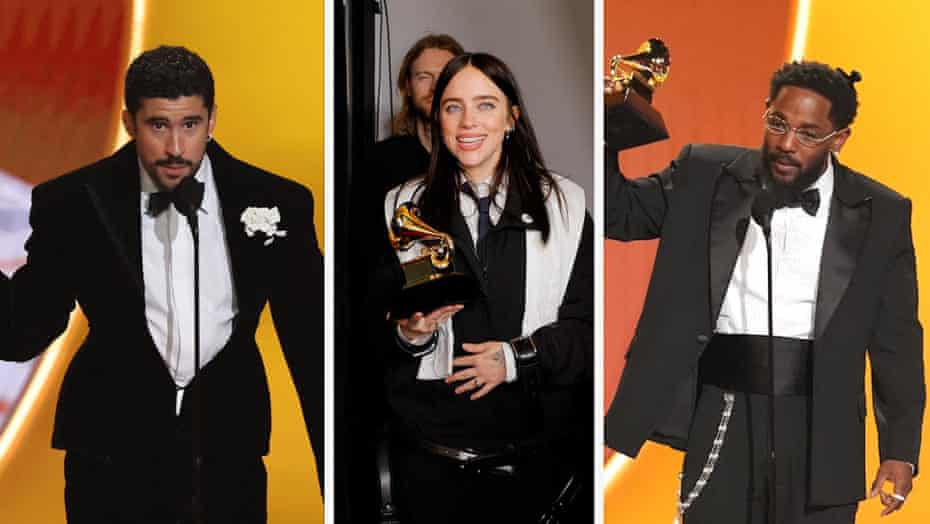
Bad Bunny and Kendrick Lamar dominated the ceremony, collecting the night’s top honours. Beyond the awards, the event was marked by repeated calls for compassion, unity and justice, with several performers openly addressing immigration issues during speeches and public appearances.
Bad Bunny won three major awards, including album of the year, best música urbana album and global music performance. During his acceptance speech, he strongly rejected anti-immigration rhetoric, emphasizing that immigrants are human beings deserving of dignity and respect. His album of the year win made history, as he became the first Spanish-language artist to receive the award.
Billie Eilish, who earned song of the year for Wildflower, also addressed the issue in her speech. She acknowledged the uncertainty facing many communities and urged people to continue speaking out, protesting and supporting one another.
Olivia Dean was named best new artist and used the moment to honour her immigrant heritage. She described her success as a product of courage passed down through generations, earning a warm response from the audience.
Kendrick Lamar achieved a landmark moment in Grammy history by winning five awards, including record of the year for Luther with SZA, as well as rap song and rap album. With 27 Grammys overall, he surpassed Jay-Z to become the most-awarded rapper of all time. Accepting his honours, Lamar said he expresses himself best through music rather than speeches.
SZA echoed messages of hope and unity during their joint appearance, encouraging resilience and faith in difficult times.
Several other artists continued the conversation beyond the main stage. Kehlani, who won two R&B awards for Folded, said musicians had a responsibility to make meaningful statements when given such a powerful platform. Gloria Estefan, after winning best tropical Latin album, spoke about the humanitarian consequences of immigration enforcement, particularly the impact on families and children.
Lady Gaga collected awards for pop vocal album and dance-pop recording and used her speech to encourage women in the music industry to trust their instincts, especially in male-dominated creative spaces. In one of the night’s biggest surprises, Lola Young won pop solo performance, defeating several more established nominees.
Steven Spielberg joined the exclusive group of EGOT winners after receiving the Grammy for best music film as a producer on Music for John Williams. He described the achievement as deeply meaningful and reflective of a lifelong passion for storytelling through music and film.
Country music honours went to Jelly Roll, Chris Stapleton and Tyler Childers, while Joni Mitchell won her 11th Grammy for best historical album. Tyler, the Creator claimed the first-ever Grammy for best album cover with Chromakopia, and Golden by Huntr/x from the Netflix series KPop Demon Hunters won best song written for visual media.
Trevor Noah hosted the Grammys for the final time, calling the show an unmatched live music experience. He explained his departure by joking about believing in term limits, while also delivering pointed humour that drew strong reactions from the audience.
The ceremony featured emotional tribute performances, including Post Malone honouring Ozzy Osbourne and Lauryn Hill paying tribute to D’Angelo and Roberta Flack, alongside a reunion performance with Wyclef Jean.
While some high-profile nominees left without awards, the 2026 Grammys ultimately stood out as a night where musical excellence and social advocacy shared the spotlight, reinforcing the growing influence of artists beyond entertainment.

