



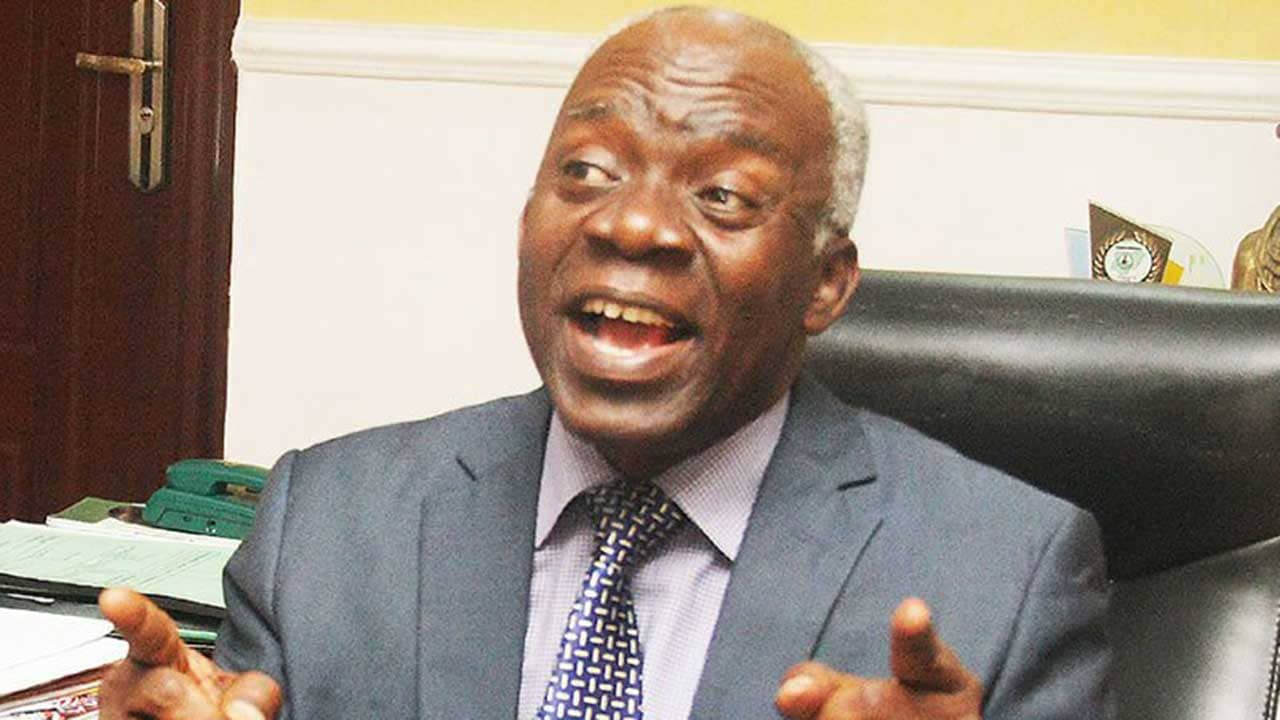
Human rights lawyer and Senior Advocate of Nigeria, Femi Falana, has said Nigeria’s armed forces are capable of defeating terrorism and banditry if they are properly funded, equipped, and motivated, without relying on foreign intervention.
He also cautioned the Federal Government against allowing the President of the United States, Donald Trump, to fuel religious tensions in Nigeria under the guise of combating insecurity.
Falana made these remarks while speaking with journalists in his hometown of Ilawe-Ekiti on Saturday. He expressed concern that terrorist groups, judging from videos in circulation, appear better armed than Nigerian soldiers, a situation he described as unacceptable.
According to him, the persistent insecurity in the country is largely a result of neglect and corruption within critical security institutions. He argued that funds allocated for the purchase of arms and ammunition had been diverted by influential individuals, leaving troops ill-equipped on the battlefield.
Falana urged the government to urgently recover stolen security funds and channel them back into strengthening the military. He said soldiers are willing and ready to confront criminal elements but are handicapped by the lack of essential equipment.
He criticised the judicial system for what he described as technical loopholes that allow individuals accused of stealing security funds to escape justice. Falana cited cases in which senior officials were discharged despite facing allegations involving billions of naira meant for national defence.
The senior advocate maintained that Nigeria’s security is the sole responsibility of its government, as provided by the Constitution, and should not be outsourced to foreign powers. He stressed that with proper investment in the armed forces, the country can successfully address its security challenges internally.
Reacting to reports of a United States airstrike on a terrorist target in Sokoto and claims that Nigeria provided intelligence support, Falana warned that framing the fight against insecurity as a religious issue was dangerous.
He rejected narratives suggesting that violence in Nigeria targets one religious group, noting that criminals involved in killings and kidnappings act without regard for religion. He cautioned that such narratives could deepen ethnic and religious divisions in the country.
Falana also linked insecurity to worsening social conditions, particularly youth unemployment. He argued that rising joblessness makes young people vulnerable to recruitment by criminal groups and called on the government to tackle economic hardship alongside security reforms.
He concluded that ending terrorism and banditry requires a comprehensive approach that includes equipping security forces, addressing corruption, ensuring accountability, and creating economic opportunities for young Nigerians.
- Latest
- Trending

