




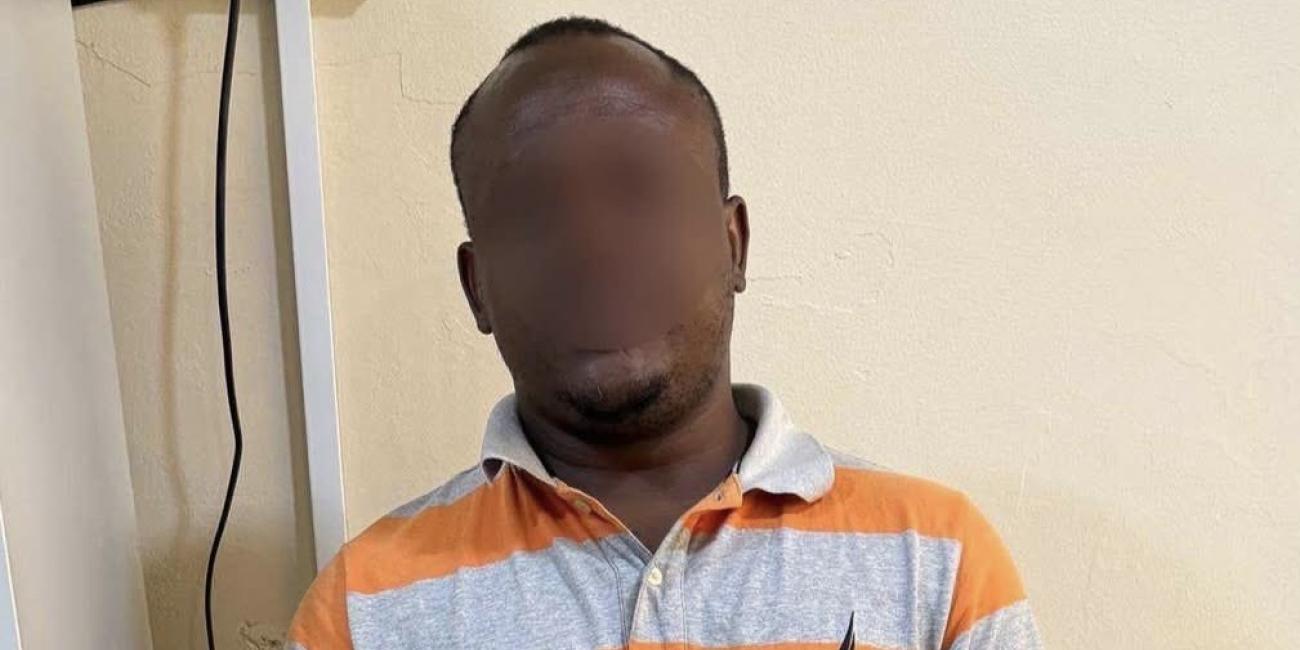
The Ghana Police Service has arrested a man over statements threatening to introduce the extremist group Boko Haram into the country amid an ongoing chieftaincy dispute, describing the comments as a serious risk to public peace and national security.
The suspect, identified as Raphael Azare Kariyama, was arrested through an intelligence-driven operation aimed at tracking and preventing the spread of messages capable of inciting violence or destabilising national security.
Confirming the arrest on Saturday, the Police Public Relations Officer, Chief Inspector Brigitte Babanawo, said the remarks were considered highly provocative, especially given the fragile security situation in parts of the Upper East Region.
According to the police, Kariyama allegedly made comments referencing Boko Haram in relation to the chieftaincy crisis in Bawku, statements authorities believe could inflame tensions and undermine peace in the area.
“The Ghana Police Service has arrested a suspect for making inciteful statements with the potential to disrupt peace and security in Bawku and its surrounding communities,” the statement said.
The police explained that the arrest followed sustained intelligence surveillance designed to identify individuals using public platforms to promote violence, issue threats or spread messages capable of escalating existing conflicts.
Kariyama is currently in police custody and is expected to be arraigned in court in accordance with Ghanaian law. The police added that efforts are ongoing to identify and apprehend other individuals connected to the matter.
The Service also cautioned the public against the misuse of social media and other communication channels, urging citizens to exercise restraint when discussing sensitive security or communal issues.
“We urge the general public to refrain from making, publishing or sharing inciteful comments, as such actions pose a threat to peace and national security,” Chief Inspector Babanawo said.
Tensions in parts of Ghana had earlier intensified after threats referencing Boko Haram surfaced online following the arrest and remand of Alhaji Seidu Abagre, a Kusasi man accused of presenting himself as the Bawku Naaba despite official recognition of another chief.
Boko Haram began trending on social media after some of Abagre’s supporters allegedly threatened to bring the extremist group into Ghana unless he was released from custody.
The situation is rooted in a long-standing chieftaincy dispute in Bawku, an area historically affected by clashes between the Kusasi and Mamprusi ethnic groups. While the Kusasi claim indigenous rights to the stool, the Mamprusi maintain that tradition and historical lineage place the chieftaincy within their authority.
For years, the Ghanaian government has officially recognised Asigri Abugrago Azoka, a Mamprusi, as the legitimate Bawku Naaba. Authorities say tensions escalated when Abagre allegedly began parading himself as the chief, a move that triggered unrest.
On December 24, 2025, Abagre was removed from the disputed palace during a military-backed operation and subsequently arrested. He was charged with impersonation, unlawfully acting as a chief and inciting violent disturbances.
On January 19, a High Court in Accra denied him bail and ordered that he remain in custody, with the case adjourned to February 2. Following the ruling, some supporters reportedly issued inflammatory statements invoking Boko Haram as a means of pressuring the government.
The police have reiterated their commitment to maintaining peace and warned that anyone found making threats or promoting violence would be dealt with according to the law.

