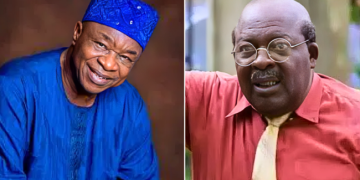




Veteran Nigerian filmmaker Wale Adenuga has addressed the controversy surrounding actor payments in his productions, particularly the long-running series Papa Ajasco and Company. Speaking on the issue, he clarified several misconceptions about how actors are paid and how the production operates.
Adenuga explained that many people wrongly assume actors on the show are full-time employees. According to him, cast members typically work for only a few weeks each year, during which multiple episodes are recorded in batches to cover the entire season. He noted that the payment often discussed publicly does not reflect the full cost of producing each episode, which includes expenses for crew members, logistics, accommodation, feeding, transportation, and television airtime.
He added that airing a single episode on major stations can cost millions of naira, making production financially demanding. Revenue is largely generated through advertising, and in many cases, producers struggle to break even. This, he said, explains why the number of TV drama producers in Nigeria has declined significantly in recent years.
On the issue of actor compensation, Adenuga stated that payments are higher than figures circulating online but declined to disclose exact amounts, citing professional confidentiality. He maintained that payments are competitive within the industry and are reviewed periodically.
Addressing concerns about long-serving actors, he emphasised that building a successful production is a collective effort involving writers, directors, and producers—not just the actors. He also pointed out that many roles in Papa Ajasco are age-specific, meaning actors are replaced over time to maintain character consistency.
Adenuga highlighted the lack of structured support systems in Nigeria’s film and television industry, noting the absence of strong guilds that could provide welfare, insurance, and pension schemes for practitioners. He suggested that such structures would help address recurring financial challenges faced by actors.
He also advised actors to diversify their income sources, stressing that acting jobs are not always consistent. According to him, many actors can leverage their popularity for endorsements, businesses, and other ventures rather than relying solely on acting roles.
Speaking on brand ownership, Adenuga said characters like Papa Ajasco are protected intellectual property and cannot be used independently without permission. He revealed that a past dispute involving actor Abiodun Ayoyinka stemmed from alleged unauthorised use of the brand and an attempt to register the name independently, which led to his temporary removal from the show before he was later reinstated.
On the broader issue of royalties and long-term welfare, Adenuga acknowledged the need for improvement but insisted that it requires industry-wide reforms rather than individual efforts by producers. He reiterated that participation in his productions is voluntary and based on agreed terms.
In conclusion, he maintained that while the industry is evolving, both producers and actors must adapt by exploring multiple income streams and strengthening professional structures to ensure sustainability.

