




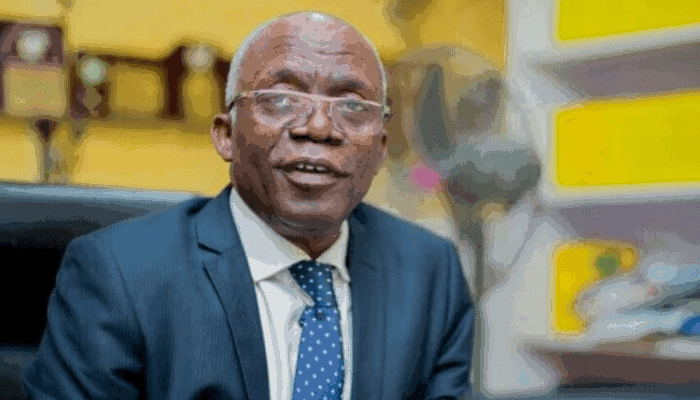
Human rights lawyer Femi Falana (SAN) has threatened to sue the Federal Government over the allocation of newly built luxury houses to judges in Abuja’s Katampe District, describing the move as discriminatory and unlawful.
Speaking in a video shared by NewsCentral, Falana criticised the government’s decision to provide exclusive housing benefits to judges while other categories of public servants continue to struggle without similar support. He said the development raises serious concerns about fairness and equality under the law.
According to him, although judges deserve decent and secure accommodation, the same level of consideration should be extended to other public servants who also contribute significantly to national development.
Falana questioned the legal basis for the housing allocation, insisting that government policies must not favour one group of officials at the expense of others. He warned that the matter would soon be taken before the courts, arguing that equal treatment is a constitutional principle that must be upheld.
To support his position, he cited university lecturers, noting that many professors are poorly paid and no longer have access to staff housing despite their important role in society.
He also criticised the benefits enjoyed by former governors now serving as lawmakers, claiming that many continue to receive legislative salaries and allowances while retaining official housing privileges in both their states and Abuja. He contrasted this with the situation of career civil servants who retire after decades of service with little or no comparable support.
Falana maintained that equality before the law should apply to every Nigerian, regardless of position.
The housing project forms part of the Federal Capital Territory Administration’s initiative, led by Minister Nyesom Wike, to construct 40 housing units for judges in Katampe. The homes are to be allocated on an owner-occupier basis, subject to President Bola Tinubu’s approval.
The initiative has also attracted criticism from some observers, who argue that the allocation could create the perception of undue influence over the judiciary.

