



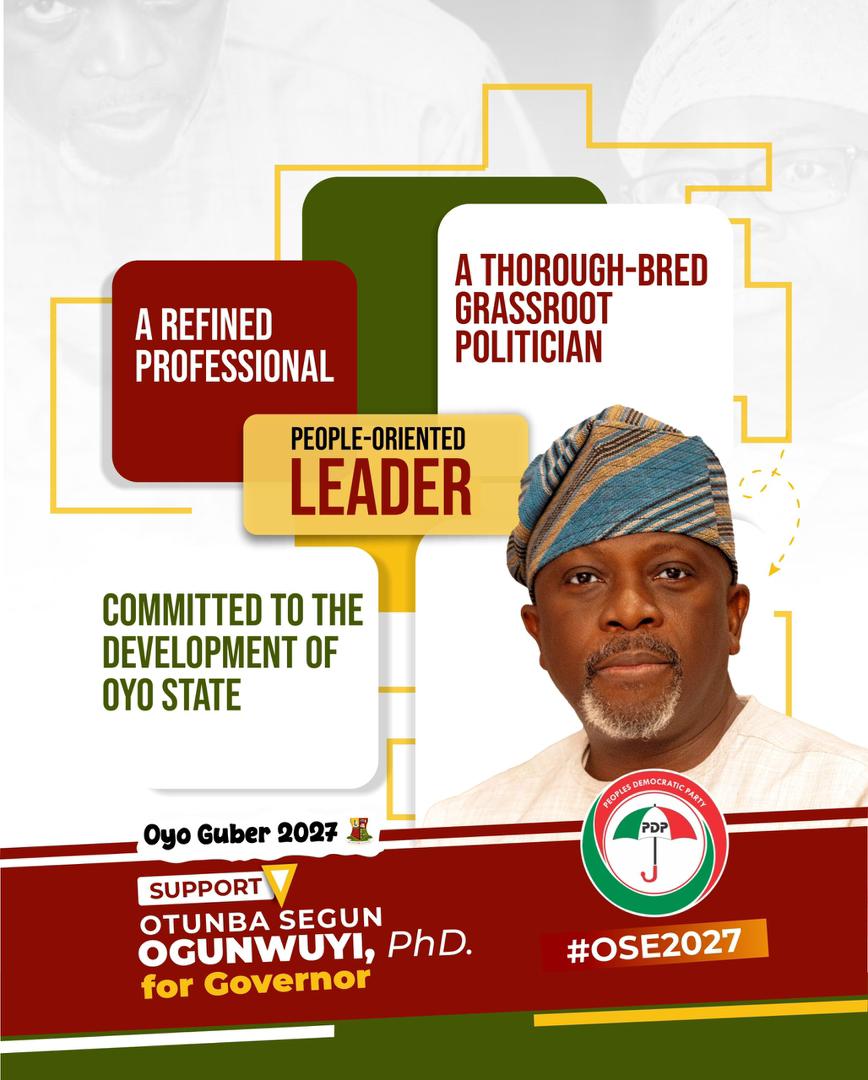
As political attention gradually turns toward the 2027 Oyo State governorship election, discussions within political circles and public forums are increasingly focused on who will lead Oyo State into its next stage of development.
Among the names being mentioned in these conversations is Segun Ogunwuyi, whose role in government has drawn attention from political observers and stakeholders.
Unlike some political figures who gain prominence mainly through campaign messaging, Ogunwuyi’s reputation has largely developed through his work within the administration of Seyi Makinde. As Chief of Staff, he works closely with the governor in coordinating government activities, supporting policy implementation, and ensuring smooth interaction between political leadership and government institutions.
Observers note that governance progress often depends on structured planning, collaboration between agencies, and effective leadership. Ogunwuyi’s position within the administration has placed him at the centre of these processes, giving him firsthand experience in managing the complex responsibilities of government.
Beyond his administrative role, Ogunwuyi is also seen by many as someone capable of bridging political and institutional interests. His approach to public service has been associated with strategic thinking, relationship-building, and engagement across different political and community groups.
Political analysts say that expectations for leadership in Oyo State are evolving, with many citizens seeking leaders who combine political awareness with practical administrative ability. Such qualities are considered essential for addressing key issues including infrastructure development, economic growth, agricultural expansion, and institutional reforms.
As conversations about the state’s political future continue, the importance of leaders who understand the inner workings of governance is becoming more evident.
While the race toward 2027 is still developing, Ogunwuyi’s name continues to feature prominently in discussions about potential leadership options for the state’s next phase of progress.

