



A wave of coordinated airstrikes carried out by the United States and Israel has led to the deaths of several high-ranking Iranian political and military figures after nearly three weeks of intense conflict.
Israeli Prime Minister Benjamin Netanyahu stated that Iran’s leadership structure is being severely weakened, while Israeli military sources described the situation as a rapid collapse of key command systems. Despite these losses, Iran has continued to operate, quickly appointing replacements and sustaining its military response.
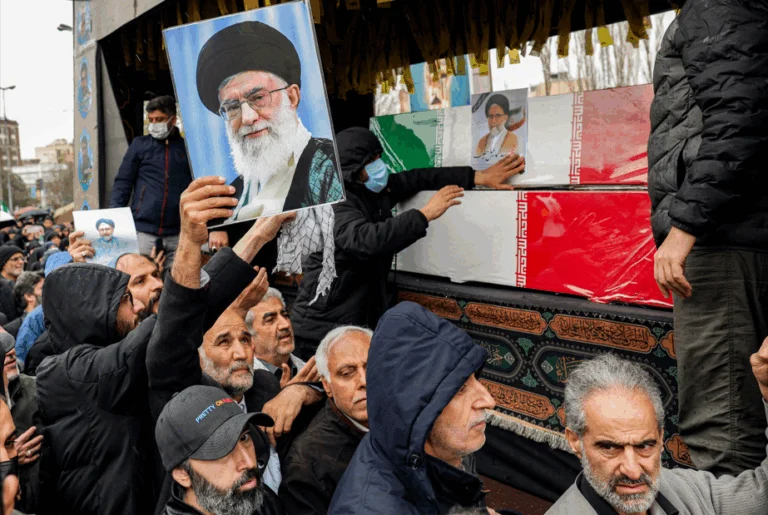
Among those reportedly killed is Iran’s Supreme Leader, Ali Khamenei, who is said to have died in an early strike targeting a high-level meeting in Tehran at the onset of the war. Reports indicate that members of his family were also affected. His son, Mojtaba, is believed to have assumed leadership, though he has not appeared publicly.
Another major casualty is Ali Larijani, a long-standing figure in Iran’s political system, who was killed in a later strike. His death is considered one of the most significant losses following that of the Supreme Leader.
Military leadership has also been heavily impacted. Mohammad Pakpour, who recently took command of the Revolutionary Guards, was killed early in the conflict. He has since been replaced by Ahmad Vahidi.
Other notable figures reported dead include:
Ali Shamkhani, a key defence and security strategist
Esmail Khatib, killed in a targeted strike in Tehran
Aziz Nasirzadeh
Gholamreza Soleimani
Ali Mohammad Naini
Mohammad Shirazi
Abdolrahim Mousavi
Iran’s Revolutionary Guards confirmed that Naini was killed in an early morning strike, describing the attack as deliberate and hostile. Just before his death was announced, he had reportedly defended Iran’s missile capabilities.
While the scale of the losses is significant, Iran has continued to demonstrate resilience by maintaining operations and reorganising its leadership structure amid ongoing hostilities.

