



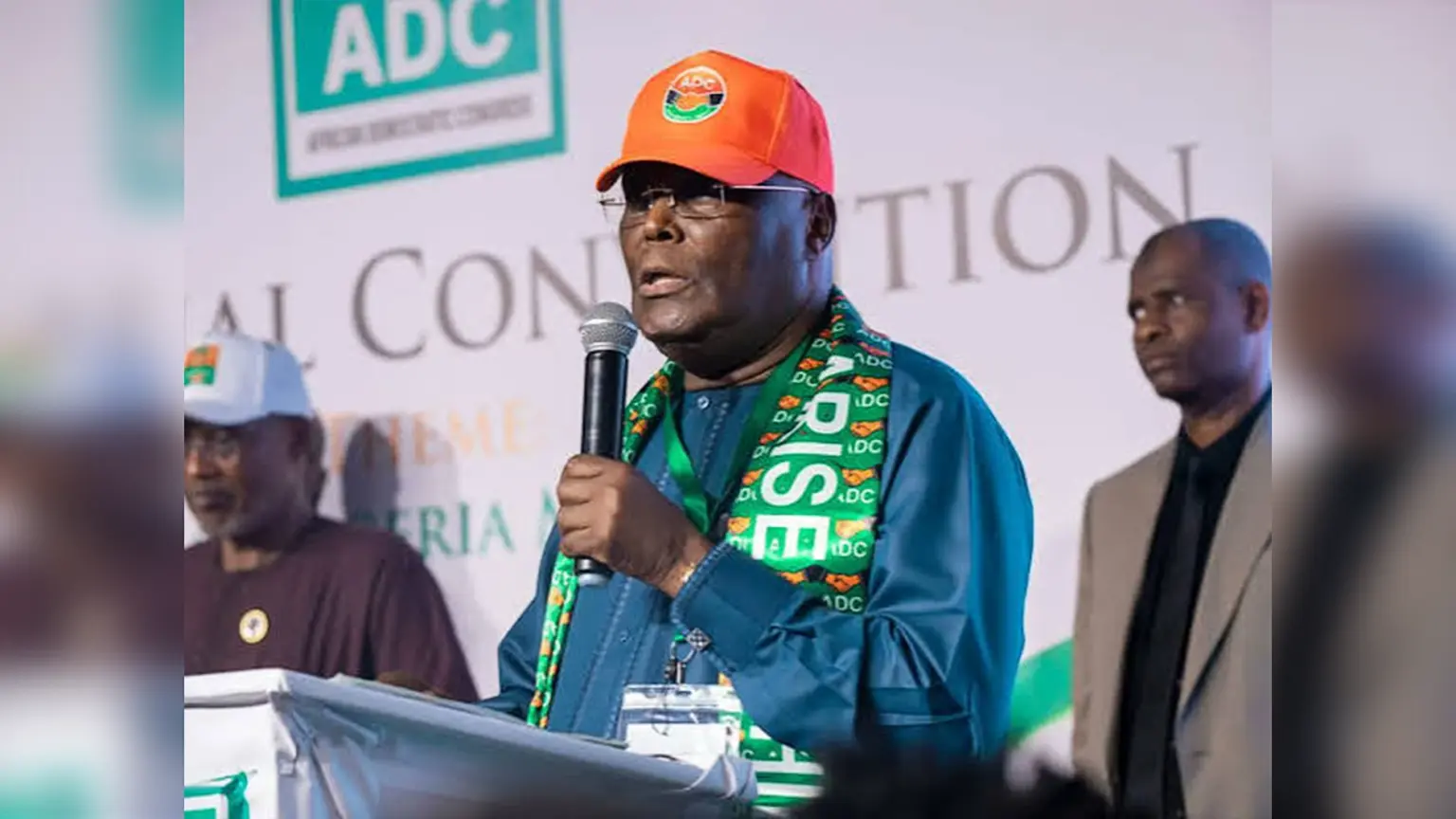
Former Vice President Atiku Abubakar has criticised the Federal Government’s approval of a ₦70,000 monthly transport allowance for public servants, describing it as a desperate attempt to contain public anger over the economic hardship facing Nigerians.
Atiku, the African Democratic Congress (ADC) presidential candidate, said the decision also showed that the government recognised the difficulties its policies had created for millions of citizens.
In a statement issued by the Director of Strategic Communication for his Presidential Campaign Council, Phrank Shaibu, Atiku argued that the cost-of-living crisis extended beyond transportation and affected nearly every aspect of daily life.
The Federal Government had approved the ₦70,000 monthly transport allowance for public servants for six months, beginning in November 2026, to help ease the impact of rising living costs.
However, Atiku maintained that workers in the private sector, traders, small business owners, transport operators and Nigerians without formal employment were also struggling with rising expenses.
“The Tinubu administration is scrambling from one announcement to another, showing its failure to grasp the crisis. The cost of living crisis reaches beyond transport: energy, food, rent and other essentials affect every part of daily life,” he said.
He explained that barbers were spending more on electricity to operate their equipment, restaurant owners were facing higher cooking costs, shopkeepers were struggling to maintain affordable prices, and school bus operators were paying more for fuel.
According to him, these rising costs were affecting households and businesses across the country.
Atiku questioned why the transport allowance was limited to public servants when millions of other Nigerians were also experiencing economic difficulties.
He said the public workforce represented only a fraction of the population and argued that temporary financial support for a section of workers could not resolve a nationwide cost-of-living crisis.
Atiku Questions Minimum Wage Negotiations
The former vice president also expressed concern that the agreement between the Federal Government and organised labour had not resolved the effective date for implementing a new national minimum wage.
He called on the government to provide clear information about the payment schedule for the transport allowance, explain who would qualify for the support and clarify when minimum wage negotiations would produce a final decision.
While acknowledging that financial assistance could provide some relief, Atiku argued that the six-month allowance would not adequately address the economic challenges facing Nigerians.
Using the petrol price of approximately ₦1,400 per litre as an example, he said ₦70,000 would purchase about 50 litres of fuel.
He questioned whether that quantity would make a significant difference to workers’ transportation expenses over an entire month.
Atiku accused the government of introducing temporary interventions instead of addressing the underlying causes of rising living costs.
“What Nigerians are witnessing is a government that set the house ablaze with its reckless policies, then pretends to fight the inferno by throwing ice cubes at the flames. A temporary ₦70,000 allowance cannot extinguish a cost of living crisis this government ignited,” he said.
He also criticised previous government initiatives, including a fuel discount and a 90-day cost-of-living plan, arguing that they had failed to provide meaningful relief.
Atiku further questioned the effectiveness of the compressed natural gas (CNG) programme, which was introduced as part of efforts to reduce transportation costs.
According to him, many Nigerians continued to face high commuting expenses despite the government’s promises.
He described the latest announcements as rushed measures and accused the administration of avoiding the consequences of its decision to remove the petrol subsidy.
Atiku Proposes Fuel Production Subsidy
The ADC presidential candidate said he had proposed a transparently managed production subsidy for fuel refined in Nigeria as an alternative way to provide relief to citizens.
He argued that Nigerians should not continue to bear the burden of economic policies because of corruption and financial leakages within the system.
Atiku maintained that the government needed to introduce lasting solutions that would make essential goods and services affordable, improve wages and support businesses.
“₦70,000 may help with transport, but it cannot explain why work, food and running a business have become unaffordable. Nigerians need lasting relief, decent wages and an economy that rewards honest work. When will life become affordable again?” he asked.
The Federal Government’s transport allowance is scheduled to begin in November 2026 and run for six months.

