




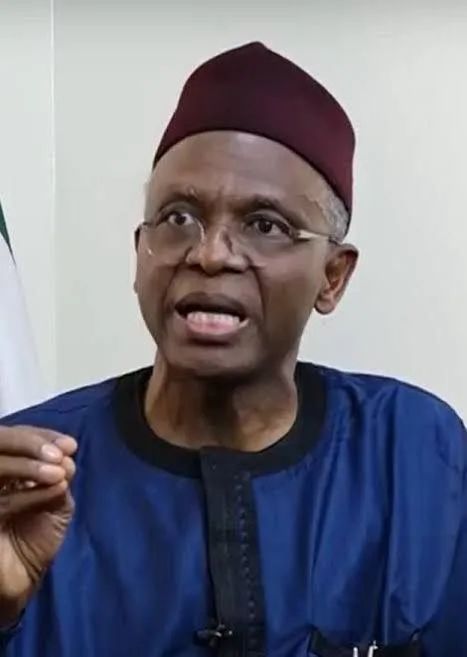
Former Kaduna State governor, Nasir Ahmad El-Rufai, has stated that he will not respond to questions from the Independent Corrupt Practices Commission (ICPC), saying his decision is based on his constitutional right to remain silent.
El-Rufai, who is currently being investigated by the anti-corruption agency, submitted two handwritten statements to ICPC officials on February 19 and 20, 2026. Both statements were made under caution and in the presence of his lawyer, Ubong E. Akpan.
In his responses, the former governor described the investigation as politically motivated and maintained that he would only address any allegations before a court of law. He argued that after nearly two years of inquiry, the commission should take its findings to a judicial body instead of continuing to question him.
In his first statement, dated February 19, El-Rufai confirmed that he understood the caution read to him and voluntarily provided personal background details, including his education and professional history. He noted that he studied at Ahmadu Bello University and later attended Harvard University and the University of London.
He also outlined his career in public service, including his tenure as Director-General of the Bureau of Public Enterprises from 1999 to 2003, Minister of the Federal Capital Territory between 2003 and 2007, and Governor of Kaduna State from 2015 to 2023.
However, he declined to answer questions relating to the probe. According to him, on the advice of his counsel, he chose to exercise his right to silence and would only respond to allegations in court. He further alleged that his position as a prominent member of the African Democratic Congress (ADC) may have influenced the investigation, describing the party as a key opposition platform.
In a follow-up statement dated February 20, El-Rufai reaffirmed his stance after investigators presented additional documents and questions. He again stated that he would reserve his right to silence and would address all issues only before a judicial authority.
Meanwhile, the ICPC had earlier obtained a 14-day remand order from a Chief Magistrate Court in Bwari. The order is expected to lapse on March 5, 2026.

