



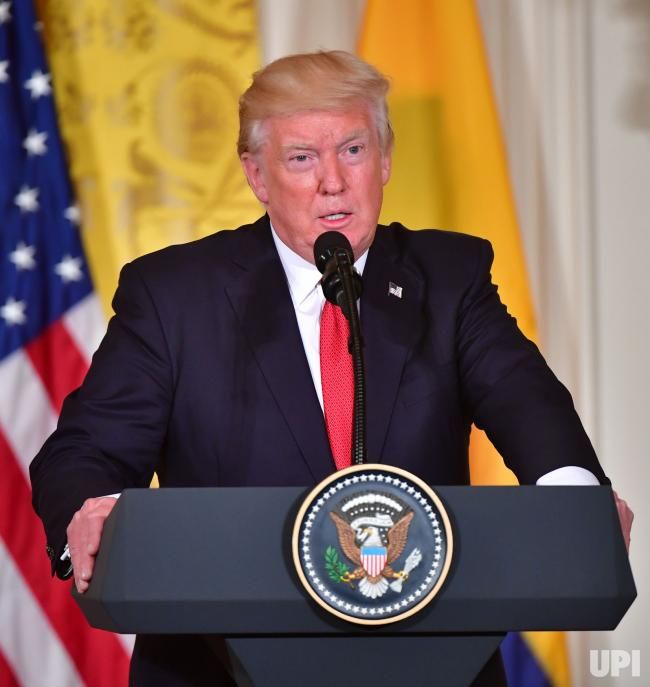
The President of the United States, Donald Trump, has said that several individuals once considered by the United States as possible future leaders of Iran are now dead.
Trump made the statement on Tuesday during a meeting at the White House with German Chancellor Friedrich Merz. While speaking in the Oval Office, the US president declined to mention any specific alternative candidate who could lead Iran in the future.
He also expressed doubts about the ability of Reza Pahlavi—the exiled son of Iran’s last monarch—to govern the country.
Pahlavi, 65, has previously stated that he is well positioned to head a transitional government and has signaled his willingness to return to Iran after more than four decades in exile. However, Trump said he is uncertain whether the Iranian public would accept Pahlavi as a national leader.
According to Trump, although some people support Pahlavi, his administration has not focused much attention on that possibility. He added that he is unsure how the exiled prince would be received within Iran.
Instead, the US president suggested that a leader emerging from within Iran might be more suitable, though he did not identify any specific individual.
Trump further noted that many figures once viewed as potential leaders are no longer alive. He added that others who were later considered might also have died, based on available reports, suggesting that a new group of potential leaders may eventually emerge.
The comments came amid ongoing tensions following military strikes targeting Iran. Among those killed in the early phase of the attacks was Iran’s Supreme Leader, Ali Khamenei, along with several senior officials. Trump also confirmed that another strike reportedly targeted remaining Iranian leadership figures on Tuesday.
Pahlavi, who has lived in the United States for many years, mainly in the Washington, D.C. area, is expected to speak later this month at the Conservative Political Action Conference in Texas.
In a recent interview, he said many Iranians trust him because he is not connected to the current Islamic government or the revolution that brought it to power.
His father, Mohammad Reza Pahlavi, was removed from power during the Iranian Revolution of 1979, a movement largely led by cleric Ruhollah Khomeini. The revolution united various opposition groups dissatisfied with the Shah’s rule, economic conditions, and modernization policies.
Despite not expecting official support from foreign governments, Pahlavi said large numbers of Iranians both inside and outside the country have expressed support for him.
Earlier this year, protests were held across cities in the United States and Europe following Pahlavi’s call for a global day of action in solidarity with demonstrations that had previously spread across Iranian cities.
Meanwhile, the US military said that since the conflict began, more than 1,700 targets inside Iran have been struck, according to the command responsible for operations in the Middle East and surrounding regions.

