




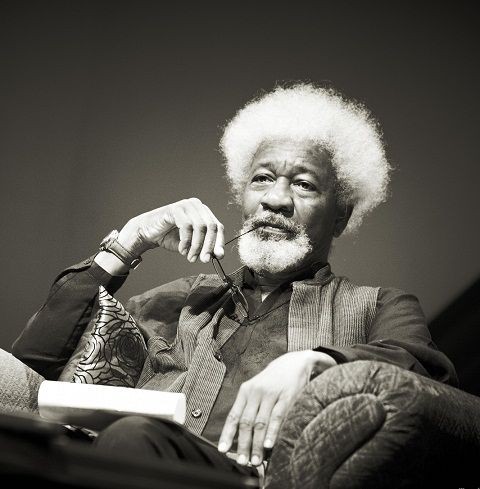
Nobel laureate Professor Wole Soyinka has expressed his preference for traditional Orisa worship over Christianity and Islam, highlighting a deeper personal connection to African spirituality and its peaceful nature.
In a recent interview with Larry Madowo on CNN, Soyinka shared that he feels a stronger resonance with Orisa worship compared to the beliefs and practices found in Christianity and Islam. He pointed out that Orisa worship, as one of Africa’s indigenous religions, fosters creativity and peace, setting it apart from other religions he has encountered.
Soyinka spoke about the value of cultural heritage and the rich traditions tied to Orisa worship, emphasizing that these practices support a peaceful and harmonious existence.
Reflecting on his upbringing, he said, “I was fortunate to be born in two worlds – the Christian world and traditional Orisa worshippers. My grandfather, until he – poor man – also got converted – he was an Orisa person and a chief, and his (grandfather’s) side (of Orisa) fascinated me a lot more.”
“For me, Orisa worship was more artistic, creative, and also more mysterious. I don’t find much of the mysterious in Christianity and even less in Islam, largely because I didn’t grow up in a Muslim environment,” Soyinka explained.
He described Orisa as open-minded and inclusive, which, in his view, allowed for the influence of foreign religions, sometimes leading to distortions of its original beliefs. According to him, Orisa worship is inherently non-violent, which distinguishes it from some other religious practices.
He further stated, “I don’t believe in the Islamic or Christian God, and if this makes me an atheist in the eyes of their followers, then so be it. However, I believe that every human being has a spiritual essence, and I consider myself to be someone who is deeply sensitive to this spiritual dimension.”
Soyinka also shared his discomfort with adaptations of his life or work, noting, “Turning aspects of my life into something others can watch is distressing for me. It makes me extremely uncomfortable. It’s not right to say it’s upsetting; rather, I feel a sense of detachment from it.”

