




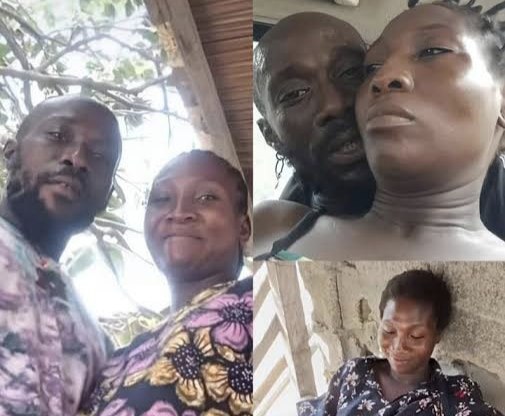
As Salam Convalescent Centre, a private hospital in Iwerekun 1, Ibeju/Lekki, Lagos, has denied allegations that it demanded a N500,000 advance payment before treating a pregnant woman, Kemi, who later died from complications related to her pregnancy.
Kemi’s husband, Akinbobola Folajimi, had shared a viral video accusing the hospital of refusing to provide urgent care for his wife because he couldn’t immediately pay the requested amount. In the video, a visibly weak Kemi was seen in a car, while her distressed husband repeatedly called her name, urging her to stay awake and think of their children.
Folajimi later posted online that after being turned away, they were referred to the General Hospital in Epe, where his wife passed away en route. According to him, “The doctor asked me to deposit N500,000. I pleaded with him to begin treatment while I sourced the funds, but they turned us away like we didn’t matter. They sent us to Epe General Hospital, knowing full well the distance from Lakwe was too far given her condition. She died before we got there.”
The heartbreaking video prompted outrage on social media, with many calling for accountability and reforms within the healthcare system.
However, in a phone interview with Drivetvnews, the hospital’s founder, Rauf Salami, refuted the allegations, insisting that no monetary demands were made. He said the woman was brought in after reportedly experiencing two seizures at home, and upon assessment, it was evident she needed urgent surgery and a blood transfusion.
Salami explained, “She was in critical condition and required specialist intervention. We immediately advised her husband to take her to Epe General Hospital, which is better equipped for such emergencies. At no point did we ask for payment. Our concern was ensuring she got the care she needed.”
He also noted that Kemi had never been a patient at the facility and had no prior medical records with them. “She arrived in a wheelchair, and we referred her without delay. They left within minutes. On Monday, I was shocked to see a misleading video online accusing us of negligence.”
Responding to the backlash, Salami admitted the situation had taken a toll on him emotionally. “The negative response has been overwhelming—enough to drive one to despair. Some have encouraged me to take legal action, and I may consider it because I have evidence.”
He emphasized that the hospital was not equipped to handle the severity of Kemi’s condition. “She had lost a dangerous amount of blood. Administering even a single drip could have worsened things. Blood is not something you can simply fetch over the counter—it requires a process. That’s why we recommended a more suitable facility.”
Salami also speculated that the woman may not have been receiving proper antenatal care, based on her critical state. “If she had been attending regular antenatal appointments, her condition likely wouldn’t have deteriorated to that level.”
He concluded by entrusting the situation to divine judgment. “As a Muslim, I believe in accepting whatever happens. ‘Inna lillahi wa inna ilayhi raji’un’—to Allah we belong and to Him we return.”
Despite the controversy, Salami expressed hope that his reputation would be restored through the continued trust of community members who have relied on his hospital over the years.

