



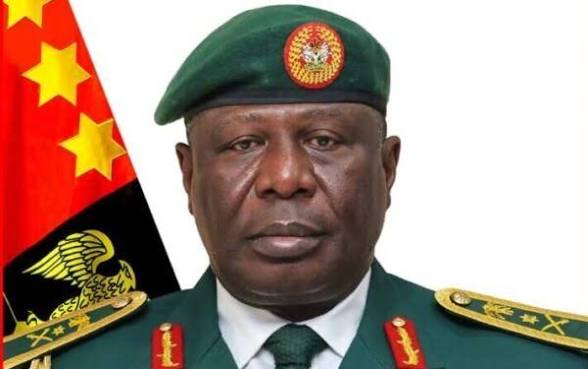
Chief of Army Staff, Lt. Gen. Waidi Shaibu, has directed military commanders to strengthen security along vulnerable humanitarian supply routes in Borno State, particularly the Dikwa–Gamboru Ngala corridor, in response to persistent terrorist threats.
Drivetvnews gathered that the directive was issued during a meeting with the Head of the United Nations Office for the Coordination of Humanitarian Affairs (UN OCHA) in Nigeria, Danielle Parry, at the Army Headquarters in Abuja.
According to a statement released by the Acting Director of Army Public Relations, Appolonia Anele, the Army Chief instructed commanders to improve force protection, reinforce convoy escort operations, and enhance collaboration between the military and humanitarian agencies to ensure the safe movement of aid workers and relief materials.
Shaibu reaffirmed the Nigerian Army’s commitment to safeguarding humanitarian operations, especially as the government continues the decongestion of internally displaced persons (IDP) camps and the resettlement of affected communities across Borno State.
He specifically ordered the Theatre Commander to strengthen security along the Dikwa–Gamboru Ngala route, describing it as a key area where remnants of terrorist groups continue to pose threats to humanitarian activities.
The Army Chief also urged UN OCHA to make better use of available resources by improving logistics planning, expanding local warehousing, and implementing the humanitarian reset initiative amid declining international humanitarian funding.
In her remarks, Danielle Parry praised the Nigerian Army for its continued support of humanitarian operations in the North-East. She noted that nearly six million people still rely on humanitarian assistance despite shrinking global funding.
Parry identified insecurity in Gwoza, Bama, Damboa, Dikwa, and Monguno as major challenges affecting humanitarian access. She appealed for continued military assistance, including the clearance of improvised explosive devices (IEDs), intensified patrols on key supply routes, and stronger security escorts for humanitarian convoys.

