




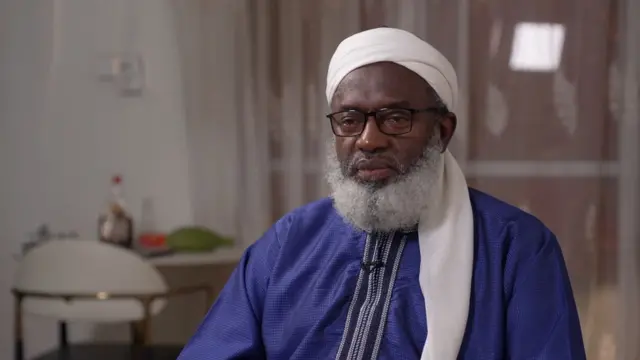
Ahmad Abubakar Gumi has claimed that the Nigerian government is fully aware of the identities and whereabouts of terrorists operating in the country.
The controversial cleric made the statement during a television interview with DRtv while explaining his controversial meetings with armed groups.
According to Gumi, his visits to areas controlled by terrorists are not carried out secretly or independently. He said security agencies are always aware of his movements and sometimes involved in the process.
“The government knows every terrorist by name and where they are located,” he said during the interview.
Gumi explained that when he plans to meet such groups, he informs security agencies and community leaders in the area.
“I don’t go alone when I visit them. I usually notify the police and other security officials, and I also involve local traditional leaders such as emirs,” he stated.
He added that some of the visits were conducted openly, sometimes even with community members present.
The cleric had earlier made similar claims in December 2025, when he alleged that foreign actors might be supporting armed groups and terrorist networks operating in Nigeria.
Speaking at the time in an interview with BBC Hausa, Gumi suggested that the recent increase in attacks across the country appeared too coordinated to be purely local operations.
He argued that the pattern of violence indicated the possible involvement of external forces with the resources and capability to destabilise Nigeria.
Gumi also pointed to improvements previously recorded in some areas before the recent resurgence of attacks.
He cited the Abuja–Kaduna Highway, once known as one of the most dangerous roads in the country, saying security on the route had improved significantly before the latest wave of violence.
The cleric also referenced the situation in Birnin Gwari, which has long been associated with banditry. According to him, many residents had begun returning to their farms before violence suddenly escalated again.
Gumi linked the renewed attacks to international discussions involving Nigeria, suggesting that the timing of the incidents appeared suspicious.
He argued that certain foreign individuals or groups with significant financial resources may have the ability to interfere in the affairs of other nations and fuel instability.
The cleric, who has consistently advocated dialogue with armed groups, said the public often focuses on condemning the perpetrators without examining the deeper causes of the conflict.
He questioned why people who once lived peacefully with their communities would suddenly turn to violence, insisting that underlying factors must be addressed.
According to him, many of the individuals involved in such crimes act out of ignorance or misinformation.
Gumi also claimed that his efforts to engage the groups through preaching and dialogue faced obstacles from the previous administration.
He said that when he attempted to reach out to them to discourage kidnapping and theft, the government did not support those efforts.
Responding to criticism that his approach appears to defend criminals, Gumi maintained that his actions are based on religious duty and principles of conflict resolution.
He emphasised that his intention is not to support armed groups but to encourage peace and discourage violence.

