



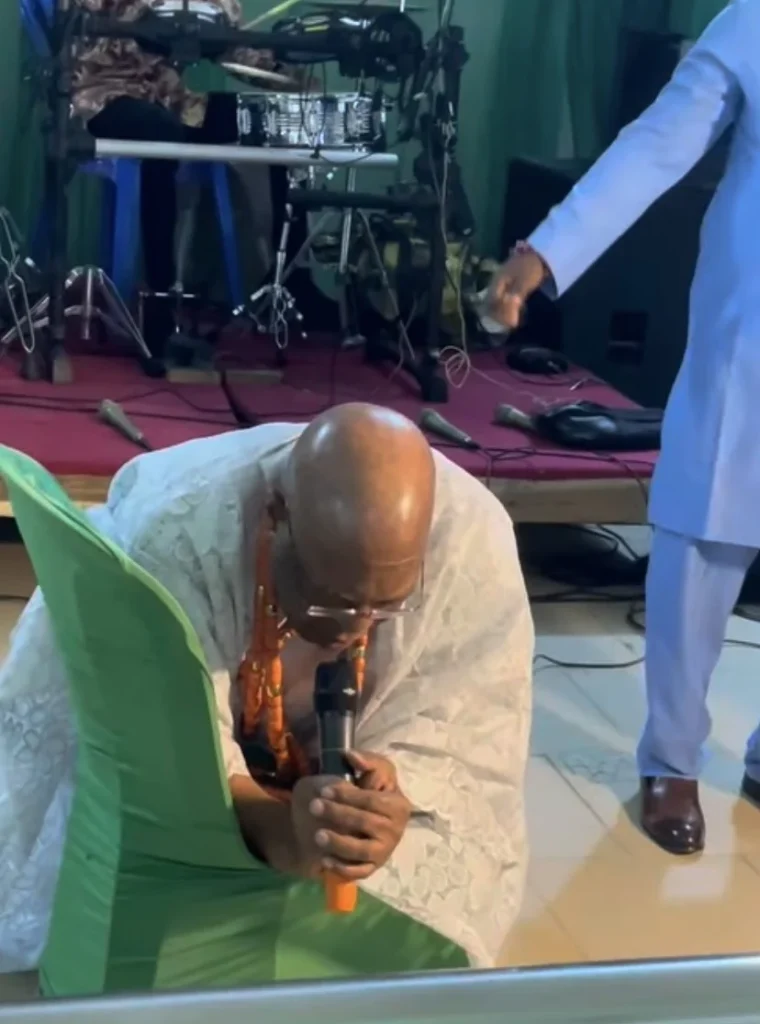
The Osile of Oke-Ona Egba in Abeokuta, Ogun State, Oba Adedapo Adewale Tejuoso, has sparked mixed reactions on social media after removing his cap during a Christian worship event.
A video of the monarch at an event titled King’s Day of Praise: A Gathering of Royal Fathers to Praise the King of Kings went viral online. The programme was held at Bishop’s Court Multipurpose Hall, Onikolobo, Abeokuta, on Thursday and was linked to the Oba Karunwi III Evangelical Movement.
The incident triggered debate over the relationship between personal religious beliefs, Yoruba cultural traditions and the responsibilities of traditional rulers as custodians of cultural heritage.
Some social media users criticised the monarch’s action, arguing that the cap carries cultural significance and should be treated with respect.
An X user, Baba Ajisefa, questioned how the monarch removed his cap, arguing that the manner in which the gesture was carried out raised concerns about respect for traditional authority.
Another user, Benja!, criticised what he described as the growing influence of religious teachings on traditional rulers. He called for laws defining the responsibilities of monarchs, the qualifications for becoming traditional rulers and the expected standards of conduct.
Similarly, Foundational Yorùbá Boy questioned the expectation that a monarch should remove his cap in a church, describing it as a religious practice created by human beings.
Mathew Oluwagbotemi also criticised the gesture, stressing that the head and crown hold important cultural significance in Yoruba tradition.
“We should not because of Christianity lose our values, our essence,” he wrote.
Other critics called for traditional education to become a compulsory part of the process of selecting monarchs. Abọyọwa argued that kingmakers should ensure aspiring rulers understand their ancestral heritage and cultural responsibilities before ascending the throne.
However, other social media users defended Oba Tejuoso, insisting that his Christian faith should not automatically be interpreted as a rejection of Yoruba culture.
Godwin Osuagwu questioned whether a crown was more important than the God being worshipped, while another commenter, Olalekan Wilson, argued that the monarch’s action reflected his recognition of a higher spiritual authority.
B for Bayo also defended the monarch, saying his conduct should be understood within the context of his personal religious convictions.
Oyedijo Toyese maintained that Yoruba traditional rulers should be free to practise their chosen religions, provided they did not prevent others from exercising their own beliefs.
Reactions on TikTok were equally divided. While some commenters described the incident as inappropriate for a traditional ruler, others said the monarch had acted according to his personal convictions.
A commenter identified as Bryto criticised the action, while Boluwatife argued that the monarch had maintained his religious practices over the years and was unlikely to be influenced by public criticism.
Other commenters questioned the cultural implications of exposing a monarch’s head, arguing that traditional rulers should be mindful of customs associated with their positions.
The controversy has renewed discussions about how traditional rulers can balance personal religious convictions with their roles as custodians of Yoruba culture and heritage.

