




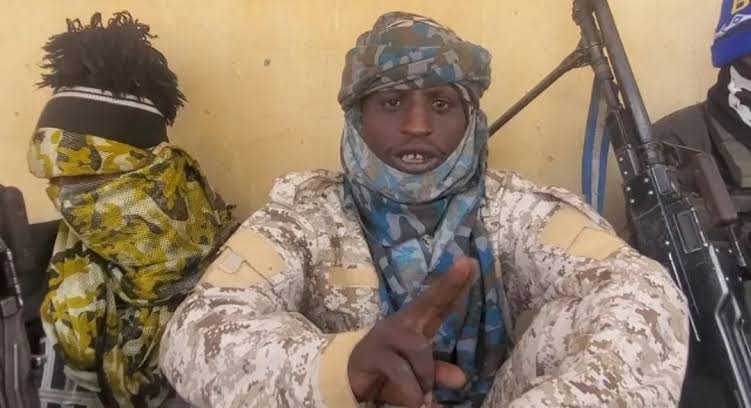
A newly circulated video allegedly featuring notorious bandit leader Bello Turji has sparked renewed concerns over insecurity in Nigeria’s North-West region.
In the footage, released on June 20, a masked individual believed to be Turji claimed responsibility for recent attacks targeting security personnel in parts of Sokoto and Zamfara states. The speaker appeared alongside several armed men dressed in military-style attire, surrounded by weapons and ammunition.
Although the claims have not been independently verified, the video has drawn attention to the continued activities of armed groups operating in the region despite ongoing military operations aimed at dismantling their networks.
Speaking in Hausa, the masked man alleged that his group carried out the attacks in response to actions taken against pastoral communities. He accused certain individuals of confiscating livestock and killing residents in communities located in Zamfara and Sokoto states, including Shinkafi and Sabon Birni.
According to the speaker, his fighters confronted those responsible and launched retaliatory attacks. However, he did not provide specific details or casualty figures to support the claims.
Security experts believe such videos are often used by armed groups as propaganda tools to project strength, boost the morale of their members, and challenge official reports of security successes. Turji has frequently used similar recordings in the past to issue threats, respond to military operations, and communicate with followers.
The emergence of the latest video comes amid intensified security operations across Sokoto and Zamfara, where authorities have repeatedly stated that the activities of bandit groups are being significantly weakened.
Observers also note that the message attempts to justify the group’s actions by portraying them as retaliation for alleged attacks on herders and the seizure of livestock, a narrative commonly employed by armed groups operating in the region.
The North-West continues to face serious security challenges, including kidnappings, killings, cattle rustling, and mass displacement. Communities along the Sokoto-Zamfara border have remained particularly vulnerable to recurring attacks by armed gangs.
What initially began as disputes over land use, grazing routes, and livestock theft has evolved into a broader crisis involving organised criminal networks, extortion, and violent attacks on rural communities.
Turji remains one of the most wanted bandit leaders in Nigeria, despite repeated military offensives targeting his hideouts and operations.
Recent reports have also raised concerns about the possible regrouping of fighters linked to his network and the acquisition of additional weapons, although these claims have yet to be independently confirmed.
The continued violence has had a devastating impact on local communities, forcing many residents to abandon their farms and livelihoods. The situation has raised fears about food production and economic stability, especially during the current farming season.
As of the time of reporting, neither the Defence Headquarters nor security agencies in Sokoto and Zamfara had officially responded to the claims made in the video. In previous instances, authorities have dismissed similar recordings as attempts to exaggerate the strength of armed groups and undermine public confidence in security operations.
While the authenticity of the latest video remains unverified, it has renewed concerns among residents who continue to face threats from banditry and violence across the region.

