




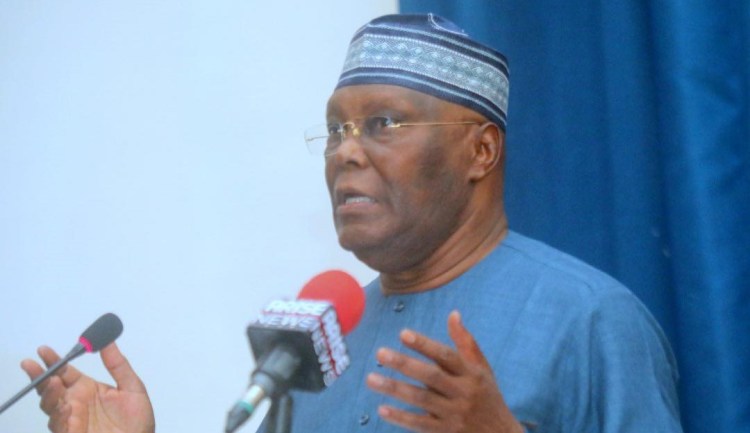
Former Vice-President Atiku Abubakar has accused the Federal Government of giving preferential tax incentives and other benefits to oil companies while Nigerians continue to face high petrol prices and worsening living costs.
Atiku, who is the African Democratic Congress presidential candidate, made the allegation in a statement issued on Sunday by his Senior Special Assistant on Public Communication, Phrank Shaibu.
He criticised President Bola Tinubu’s decision to remove the petrol subsidy, arguing that it was inconsistent for the government to reject subsidies for Nigerians while continuing to provide tax credits, concessions and other incentives to petroleum investors.
Atiku said Nigerians were told that removing the petrol subsidy was necessary to reform the economy and that they had to endure the resulting hardship. However, he alleged that the government takes a different approach when dealing with major oil investors.
He pointed to incentives available to eligible deep offshore oil and gas projects, saying they could receive production tax credits of between $3 and $4.50 per barrel, with additional incentives potentially raising the total benefit to as much as $11.50 per barrel in some cases.
“So, what exactly is Tinubu’s objection: government intervention itself, or government intervention for Nigerians?” Atiku asked.
The former Vice-President also questioned whether the petrol subsidy had truly been eliminated. He referenced NNPC Limited’s audited accounts, which he said recorded about N4.84tn in energy-security expenses and related shortfalls in 2023, rising to approximately N7.13tn in 2024.
According to Atiku, NNPC attributed part of the expenses to differences between the exchange rate used to determine regulated petrol prices and the rate applied when import obligations were settled.
He questioned why Nigerians were told that petrol subsidies had ended if the government was still spending trillions of naira on under-recovery and other energy-security costs.
Atiku argued that the government should focus on the actual financial impact of such payments rather than what they are officially called, insisting that public funds were still being used to cover gaps between petrol costs and selling prices.
He said his proposed economic recovery programme would not restore the former subsidy system, which he described as open-ended and lacking transparency.
Instead, he proposed a targeted and capped intervention that would be properly budgeted and independently audited. He said the policy would be tied to increased local production, expansion of refining capacity, greater competition and efforts to improve household purchasing power.
Atiku also called for greater transparency regarding tax credits, remissions and other incentives granted to companies in the petroleum sector. He said the government should disclose the beneficiaries, the amount of revenue involved and the investments delivered in exchange for the incentives.
He further argued that Nigerian investors should have fair and transparent access to similar benefits.
According to Atiku, the success of economic reforms should ultimately be measured by whether they improve Nigerians’ living standards rather than by how much hardship citizens are forced to endure.
His comments came after he said he would restore the petrol subsidy if elected president in 2027. Tinubu subsequently criticised the proposal, describing Atiku as “ignorant of governance and the economy.”

