



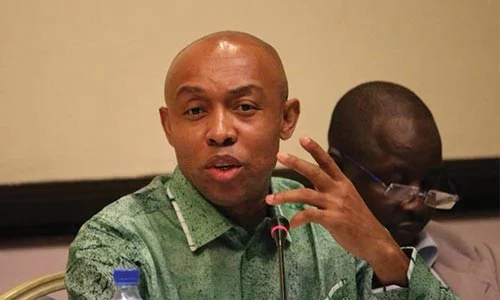
Former Chairman of the National Human Rights Commission, Professor Chidi Odinkalu, has criticised Nigeria’s judiciary over what he described as its growing influence in determining electoral outcomes and political mandates.
Odinkalu spoke virtually at the third Tunji Braithwaite Symposium in Lagos, where he delivered a keynote address titled, “The Judiciary and Electoral Integrity in Nigeria: Safeguarding Free, Fair, and Credible Elections for Democratic Consolidation.”
The human rights lawyer argued that courts had moved beyond simply resolving electoral disputes and were increasingly involved in determining who ultimately occupies political offices.
He questioned whether popular sovereignty could be fully maintained when judicial decisions could overturn election results and determine political mandates.
Odinkalu cited Section 14(2)(a) of the 1999 Constitution, which states that sovereignty belongs to the people of Nigeria, from whom government derives its powers and authority.
He also referenced the African Charter on Democracy, Elections and Governance and the Universal Declaration of Human Rights, arguing that the will of citizens expressed through genuine elections should remain the basis of governmental authority.
According to him, courts should interpret and enforce electoral laws without taking over the constitutional role of voters in deciding who governs them.
“The mandate to rule is an incentive conferred by the people,” he said, adding that voters could renew or withdraw the mandate based on the performance of elected officials.
Odinkalu warned that weakening the connection between voters and political power could damage democratic accountability.
He described Nigeria’s electoral jurisprudence as increasingly dominated by litigation and judicial decisions, while arguing that citizens were becoming less central to the determination of electoral outcomes.
However, he clarified that his criticism was not directed at all Nigerian judges, noting that some judges remained committed to delivering proper judgments.
He also questioned the reliance on legal technicalities in election cases, arguing that voters expect electoral outcomes to be determined primarily by the votes cast rather than lawyers’ ability to frame pleadings.
Odinkalu cited several electoral disputes, including the 2007 Rivers State governorship case involving Rotimi Amaechi, the 2019 Zamfara governorship controversy and disputes arising from the 2023 Plateau State legislative elections.
He called for reforms to Nigeria’s electoral justice system, including changes to judicial doctrines governing pre-election and post-election cases.
Odinkalu also advocated the abolition of what he called the “doctrine of wasted votes” and urged the National Judicial Council to strengthen scrutiny of allegations of judicial misconduct.
Drawing from the legacy of late lawyer Tunji Braithwaite, Odinkalu encouraged Nigerians to take a greater interest in electoral justice and demand reforms aimed at restoring the role of citizens in determining political leadership.

