




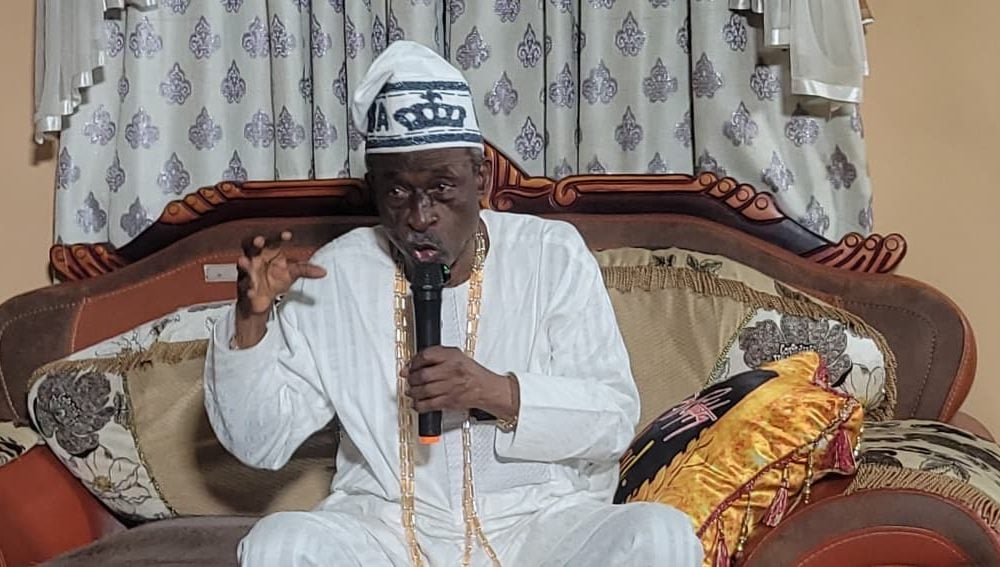
The Apena of Egbaland and Oluwo of Iporo-Ake, Chief Alani Bankole, has argued that Nigeria has enough opportunities for people willing to work, saying laziness contributes significantly to hunger among some citizens.
Drivetvnews gathered that Bankole made the remarks during a media interaction on Wednesday, where he expressed concern over what he described as the declining culture of hard work among young Nigerians.
The 85-year-old traditional chief blamed both parents and the wider system for failing to properly prepare youths for productive lives. He said children should be introduced early to meaningful activities and taught the value of hard work.
According to him, Nigerians should focus more on learning how to create wealth rather than relying solely on salaried employment or government assistance.
“Teach people how to make money, don’t give them money. Salary jobs are only meant to eat. When you learn how to create wealth, you become rich,” he said.
However, Bankole also criticised the country’s governing structures, arguing that systemic weaknesses have contributed to many of Nigeria’s challenges.
He questioned whether the President could personally solve unemployment and poverty without broader changes to the system, asking, “Is it Tinubu that will go and farm for you?”
The father of former House of Representatives Speaker, Dimeji Bankole, said political leadership alone may not bring fundamental changes if the structures supporting governance remain weak.
He also argued that political office holders are often constrained by the system when selecting government officials, stressing the importance of merit, institutional development and human capacity.
Bankole, a former National Chairman of the defunct All Nigeria Peoples Party, ANPP, said the quality of leadership is influenced by the structures and resources available to those in government.
On the 2027 general elections, the traditional ruler declined to offer advice to politicians, saying the style of politics being practised today differs significantly from what he experienced during his political career.
He recalled that politicians of his generation focused more on reaching people in rural and border communities during campaigns, rather than relying mainly on the methods used by politicians today.

