



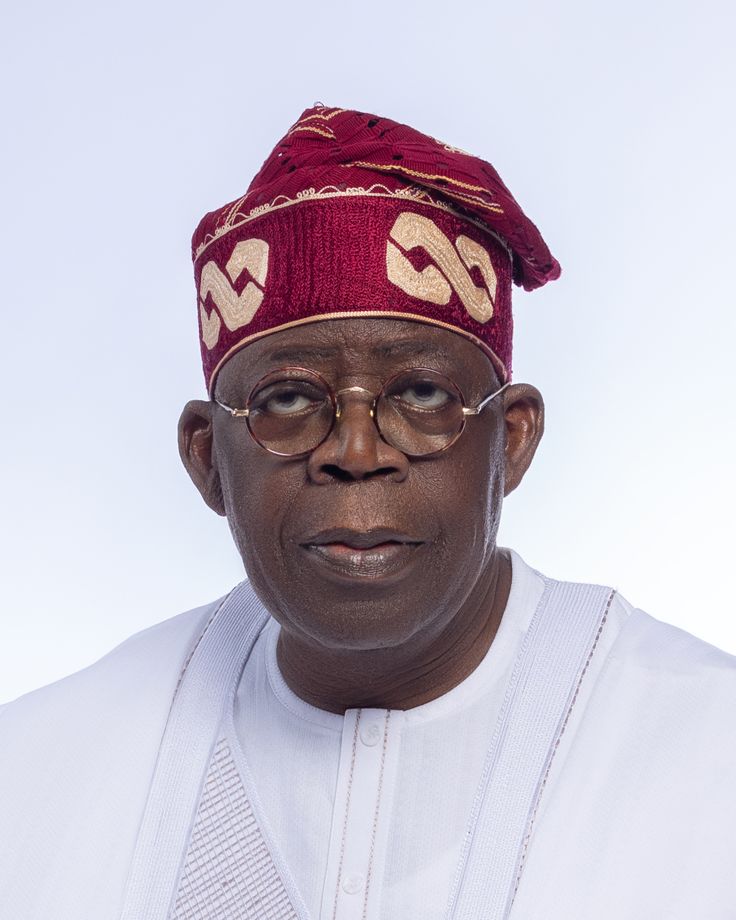
President Bola Tinubu has asked a United States federal court to reject a request seeking the release of his unredacted records held by the Federal Bureau of Investigation and the Drug Enforcement Administration.
In filings submitted by his lawyers and published on Saturday, Tinubu argued that the requested records should remain withheld under provisions of the US Freedom of Information Act and Privacy Act.
The President’s legal team also argued that there was no legitimate public interest that would justify releasing the records and alleged that the request was motivated by political interests in Nigeria.
The application was filed in response to a request by American transparency activist Aaron Greenspan, who is seeking access to records relating to Tinubu through the US Freedom of Information Act.
Why Tinubu wants the records withheld
Tinubu’s lawyers gave four major reasons for opposing the disclosure.
First, they argued that US privacy laws protect the information contained in the law-enforcement records. They specifically cited FOIA Exemption 7(C), which protects personal information in law-enforcement files.
Second, the legal team rejected the argument that Nigerians’ interest in Tinubu’s background and suitability for office amounted to the type of public interest recognised under US FOIA law.
Third, the lawyers argued that Greenspan’s request was driven by political objectives, particularly because the information could be used in Nigeria’s political arena ahead of the 2027 presidential election.
Fourth, they disputed claims that the records could expose evidence of secret prosecution or an agreement by US authorities not to prosecute Tinubu, describing such claims as speculative and unsupported by evidence.
The lawyers relied on a 1989 US Supreme Court ruling to argue that FOIA is primarily intended to allow the public to understand government activities, rather than provide information about private individuals contained in government files.
Background to the controversy
The controversy over Tinubu’s US law-enforcement records gained prominence during the build-up to Nigeria’s 2023 presidential election.
The issue was linked to a 1993 US civil forfeiture case involving $460,000 held in an account associated with Tinubu. US authorities had alleged that the funds were connected to narcotics trafficking or prohibited financial transactions.
The All Progressives Congress maintained during the election litigation that the case was a civil forfeiture proceeding and did not amount to a criminal conviction.
The Presidential Election Petition Court later ruled in September 2023 that the petitioners had not established that Tinubu was arrested, arraigned, convicted or sentenced in a criminal case in the United States.
Despite that ruling, efforts to obtain additional records from US authorities have continued.
Court ordered agencies to process records
In April 2025, US District Judge Beryl Howell ordered the FBI and DEA to lift their previous “Glomar” responses, under which the agencies had declined to confirm or deny whether records relating to Tinubu existed.
The agencies were subsequently directed to process the requested records while applying any exemptions permitted under US law.
The records being sought reportedly include the entire FBI file on Tinubu and FBI Form 302 interview records relating to investigations between 1992 and 1993.
The FBI has sought to keep portions of the records confidential, citing exemptions involving law enforcement, privacy, investigative techniques and the safety of individuals.
The ongoing case is a Freedom of Information Act dispute over access to government records. It does not, by itself, amount to a criminal prosecution of Tinubu or establish that he committed a drug-trafficking offence.
Opposition demands disclosure
The President’s position has drawn criticism from opposition political parties, which argue that Nigerians have a right to know more about his history.
African Democratic Congress spokesperson Bolaji Abdullahi said Tinubu should allow the records to be released if he wanted to put the controversy to rest.
The Nigeria Democratic Congress also argued that the President should permit the disclosure, insisting that the matter had remained unresolved for too long.
The opposition maintained that Tinubu’s political status makes information concerning his background a matter of legitimate public interest and urged him to use the disclosure to clear any doubts surrounding the controversy.

