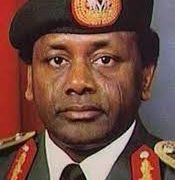




A former Assistant Director of the Department of State Services (DSS), Dennis Amachree, has claimed that Nigeria’s former Head of State, General Sani Abacha, died from a cardiac arrest during an intimate encounter, dismissing long-standing claims that he was poisoned.
Drivetvnews gathered that Amachree made the assertion in his newly released memoir, DSS @40: My Journey Behind the Shield, excerpts of which were published on Tuesday. He said he served as Assistant Director of Operations and Intelligence at the Lagos DSS Command when Abacha died in June 1998.
According to him, the late military ruler suffered a fatal cardiac arrest at about 4:05 a.m. inside the Presidential Villa in Abuja during a private encounter with a woman.
The retired intelligence officer alleged that the woman, a pharmacist who was in Abuja for a professional conference, had accompanied her elder sister—said to have been Abacha’s girlfriend—to the Presidential Villa earlier that night. He claimed Abacha later spent time alone with the younger sister after the elder sibling returned to her hotel.
Amachree stated that during the encounter, the woman noticed Abacha had become unresponsive. After checking for a pulse and finding none, she reportedly panicked, left the villa, and requested transport back to her hotel.
He further alleged that the woman boarded an early morning flight to Lagos before security operatives became aware of the incident. Following instructions from DSS headquarters, he said he led a team that located and questioned her before she was returned to Abuja.
According to Amachree, the woman insisted she had no involvement in Abacha’s death, saying the former military ruler collapsed during the encounter.
The former DSS official maintained that her account contradicts decades of speculation surrounding Abacha’s sudden death, including claims that he was poisoned.
General Sani Abacha ruled Nigeria from November 1993 until his death on June 8, 1998. His unexpected death has remained one of the country’s most debated political events, with various conflicting accounts emerging over the years. Amachree’s memoir presents his personal account of the incident, but the claims remain his version of events and do not conclusively settle the longstanding controversy.

