



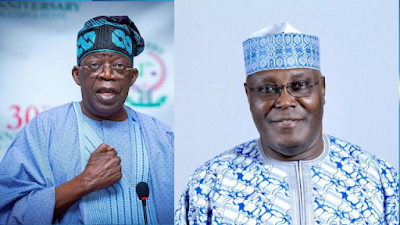
President Bola Tinubu has criticised former Vice President Atiku Abubakar over his promise to restore petrol subsidy if elected president in 2027, describing the proposal as evidence of a poor understanding of Nigeria’s economy.
Reports gathered by Drivetvnews indicates that Tinubu spoke on Thursday while receiving Osun State Governor, Ademola Adeleke, at the Presidential Villa in Abuja.
The President argued that removing petrol subsidy had significantly improved the finances of state governments and increased the resources available to the three tiers of government.
According to him, states previously struggled to pay workers’ salaries and pensions, but increased revenue following the subsidy removal had given them greater capacity to meet their obligations.
Tinubu maintained that the additional funds should be used by state governments to improve infrastructure, healthcare, education, housing and other services that directly affect citizens.
His comments followed Atiku’s recent pledge to reverse the subsidy removal if he wins the 2027 presidential election under the African Democratic Congress.
Atiku has questioned how the savings from subsidy removal were utilised, arguing that Nigerians would have benefited more if the funds had been directed towards security, education, employment and poverty reduction.
He has also promised to investigate alleged mismanagement of the funds and recover any money found to have been diverted.
However, the Presidency rejected Atiku’s claims, insisting that there was no separate N30 trillion subsidy windfall sitting somewhere as savings.
Special Adviser to the President on Information and Strategy, Bayo Onanuga, said the former subsidy arrangement involved government covering the difference between the regulated pump price and the actual cost of supplying petrol.
He argued that returning to the old system would be financially difficult and would require a clear legal and funding framework.
The Presidency also maintained that the Petroleum Industry Act had already established a market-oriented structure for the downstream petroleum sector before Tinubu accelerated the implementation of subsidy removal in May 2023.
Government officials have said that about N15.8 trillion in additional revenue accrued to the country over the past three years following the removal of subsidy, with funds distributed among the federal, state and local governments.
Separately, FCT Minister Nyesom Wike also attacked Atiku’s position, accusing him of changing his stance on subsidy for political reasons.
Wike argued that Atiku had previously supported subsidy removal but was now advocating its return ahead of the 2027 election.
The controversy has renewed debate over the economic impact of subsidy removal, government revenue, living costs and the competing policy proposals expected to dominate the 2027 presidential campaign.

