




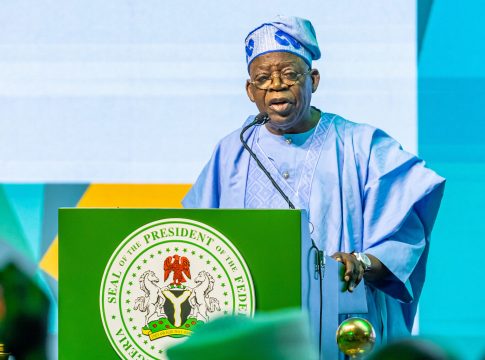
The Federal Government has abandoned plans to immediately ban solar panel imports, following concerns that the restriction could increase electricity costs and slow Nigeria’s transition to renewable energy.
The Minister of Innovation, Science and Technology, Kingsley Udeh, announced the decision on Friday, stating that the government would prioritise quality standards for solar panels sold in Nigeria rather than exclude imported products.
He explained that the government would continue allowing imports until local manufacturers developed sufficient capacity to meet domestic demand.
Udeh said the administration was working to expand electricity access through initiatives such as the Renewed Hope Solarisation Project, which targets federal universities and other specialised educational institutions.
He added that the government intended to ensure that only high-quality solar panels, whether manufactured locally or imported from reliable sources, were available in the Nigerian market.
The decision is expected to reassure solar importers, installers and consumers who feared that an immediate ban could disrupt supplies, increase equipment prices and affect investments in off-grid electricity systems.
Nigeria continues to depend significantly on imported solar equipment as households and businesses seek alternatives to unreliable grid electricity. Millions of Nigerians still lack access to electricity.
Data from Chinese customs, cited by energy think tank Ember, indicated that China exported 2.4 gigawatts of solar panels to Nigeria in the 12 months leading to August 2026. The shipments were valued at $269 million.
Energy analysts estimated that generating an equivalent amount of electricity using diesel generators could cost approximately $980 million annually. They suggested that replacing diesel-generated electricity with solar power could save users more than $700 million a year, depending on actual usage and operating costs.
The President of the Renewable Energy Association of Nigeria, Ayo Ademilua, welcomed the government’s position but stressed that domestic manufacturers were not yet equipped to meet the country’s solar panel requirements in terms of volume and affordability.
Ademilua said members of the association supported the development of a local solar manufacturing industry, noting that some were already investing in domestic assembly and production.
However, he warned that an immediate import ban could increase costs, delay projects and undermine the progress made in expanding solar energy access over the past decade.
He noted that solar power had become an important electricity source for homes, hospitals, schools, farms and small businesses, particularly in areas poorly served by the national grid.
Solar systems have also helped businesses reduce their dependence on petrol and diesel generators, offering some protection against fuel price fluctuations and electricity supply disruptions.
Energy analysts cited in the report estimated that a 420-watt solar panel costing about $60 could generate approximately 550 kilowatt-hours of electricity annually. Producing the same amount of electricity with diesel was estimated to cost around $160 at prevailing prices.
Based on that comparison, the panel’s purchase cost could be recovered in about five months if its entire output replaced diesel-generated electricity. However, the estimate excludes the costs of batteries, inverters, installation and maintenance.
The Executive Director of the Global Initiative for Food Security and Ecosystem Preservation, Dr David Michael, also urged the government to support domestic manufacturing without making renewable energy unaffordable.
Michael called for a long-term policy that would attract investment in local production while ensuring that households and businesses could continue accessing reliable and affordable electricity.
Similarly, Muhammad Mustafa Amjad, Programme Director of Renewables First in Pakistan, said Nigeria could learn from Pakistan’s experience, where access to affordable solar equipment had helped households and businesses reduce their dependence on conventional electricity sources.
Amjad argued that keeping solar imports accessible would support Nigeria’s efforts to expand renewable energy, particularly given the country’s abundant sunshine and high dependence on diesel generators.
Joseph Ibrahim, Nigeria Campaign Director of the Secure Energy Project, also welcomed the decision, describing affordable solar access as a national priority amid persistent electricity challenges.
He called for a clear, long-term strategy that would support domestic manufacturers, attract investment and enable locally produced solar panels to compete with imported alternatives on price and quality.
The debate over solar imports dates back to March 2025, when Udeh’s predecessor, Uche Nnaji, proposed restricting imports to encourage domestic manufacturing. Nnaji left office in October 2025, but uncertainty surrounding the proposal continued to concern industry operators.
In April 2025, the head of the Rural Electrification Agency reportedly stated that imports would not be restricted until local production capacity could meet domestic demand. However, the absence of a formal withdrawal of the proposed restriction left businesses uncertain about the government’s intentions.
Renewable energy advocates are now calling for a phased transition over three to five years, supported by clear timelines, incentives for manufacturers and measurable targets for increasing domestic production.

